
Siyahi's Writers' Retreats:
Chapter Three – Mastering Historical Writing
Writing History: Fact, fiction & the fluid in between
21–29 September 2025 | Ahilya Fort, Maheshwar
Atop a quiet cliff overlooking the sacred Narmada River, Ahilya Fort in Maheshwar stands like a memory held in stone. Cobbled courtyards, carved balconies, and echoes of Ahilyabai’s legacy create a space where past and present meet in perfect harmony. This September, Chapter Three of the Siyahi Writers’ Retreat invites a circle of committed writers to step into Ahilya Fort’s quiet corridors and begin the deep, deliberate work of writing the past beyond dates and data, and into human story.
Whether you're writing historical fiction or nonfiction, this retreat is about learning how to bring texture, complexity, and emotional truth to your stories. You'll explore how to animate characters who once lived (or might have), how to ask critical questions about what’s missing from the record, and how to turn facts into arcs without flattening them.
Chapter Three is about walking the line between research and imagination, and seeing the evidence with empathy. And it’s about writing your piece in a place where every stone, ritual, and ruin holds a story.
Over eight days of immersive masterclasses, group discussions, mentoring, and personal writing time, participants will explore how to walk the blurred line between history and fiction. How do you turn facts into narrative arcs? How do you let ruins guide your pen? This is a retreat for writers of both historical fiction and nonfiction. Whether you're imagining characters from another time or bringing real moments from the past to light, Chapter Three will give you the tools and space to write your historical narrative with depth. The tools come in the form of intensive masterclasses and immersive excursions where the mentors will teach you how to read archives, decode silences in the records, interpret architecture, textiles, objects, and oral traditions, and translate history into prose. The space is Ahilya Fort itself: a quiet, luxurious retreat layered with memory, where your narrative can take shape slowly, fueled by stories that stretch across centuries.
Led by author and public historian Anirudh Kanisetti, and art historian and designer Annapurna Garimella, the retreat will unfold through workshops, heritage walks, riverside reflection, and conversations on power, memory, evidence, craft, and imagination. Expect quiet mornings, story-swapping over slow dinners, and that rare, uninterrupted, unhurried time that is entirely your own.
To write history, begin with what moves you.
Meet the Mentors

Anirudh Kanisetti
Anirudh Kanisetti is an award-winning author, columnist, and public historian whose work bridges scholarship and storytelling…
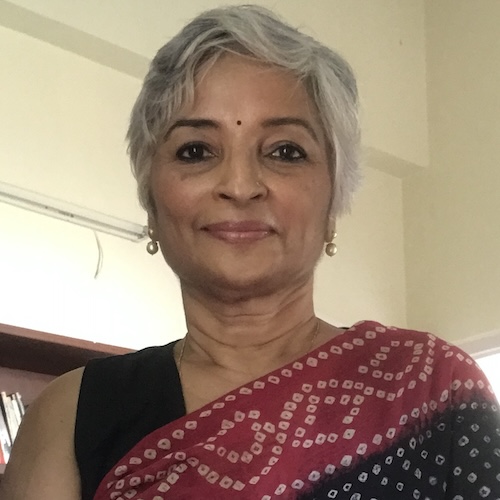
Annapurna Garimella
Annapurna Garimella is an art historian and designer whose work explores the intersections of architecture, craft, and vernacular visual cultures…
Beyond empires and edicts: how do you feel your way through the past?
More than a record of events, history lives in the gaps between what was recorded and what was remembered. At Chapter Three of Siyahi’s Writers’ Retreat, you’ll learn to navigate those layers. Here's what to expect:
- Power, People, and the Pulse of the Past: Explore how to write history from the margins- tracing and reimagining forgotten voices, questioning power, and translating archival silences into story. Learn to work with evidence, texture your prose, and build a historical imagination that balances fact with fiction.
- Story Circles and Evenings of Dialogue: From forest traders to forgotten clerks, from silent sculptures to rivers that remember, these evening circles unfold in the very courtyards where Ahilyabai once walked. As dusk falls over the Narmada, gather under the starlit skies to reflect on what history left unsaid, what still echoes through the fort’s quiet arches, and what stories remain to be written.
- Understanding the Influence of Design in History: Explore how craft, ritual, and visual cultures hold memory. Read textiles, temples and traditions as living archives. Through walks, weaves, and art history, you’ll learn to write with the textures of the past.
- Time to Write, Space to Wander: Whether it's daybreak by the ghats with the Narmada whispering beside you, or a quiet hour under the antique lamp in your jharokha, the Fort offers ample space for reflection. This is your time to think, feel, and allow the place to shape your pace. In Maheshwar, history lingers in the air, and your words have room to arrive when they’re ready.
- Understanding Research as a Creative Act: Through masterclasses and guided sessions, you'll learn how recent and ancient histories speak to one another, and how the intimate and the monumental coexist in any good story. You'll dive into archival work and citation practices, gaining the tools to ground your writing in fact while allowing space for feeling and interpretation. Whether you're writing fiction or nonfiction, you'll begin to see research as a creative act that helps you shape a deeper, more resonant narrative.
- Attention to Every Idea, Every Line: Each day, you’ll sit down with the mentors for focused, in-depth mentoring. These one-on-one sessions are tailored to your voice, your pace, and your project, offering the kind of editorial attention that helps your story breathe on the page. Whether you’re shaping a single scene or untangling the spine of your manuscript, you're encouraged to ask questions every step of the way.
- A Doorway into Local Heritage: Explore REHWA’s centuries‑old weaving traditions, and witness daily rituals like the Lingaarchan Puja. From boat rides at sunset along the sacred Narmada to wandering mahua-scented village paths, this retreat is an invitation to live the history you're writing.
- Time Travel, Maheshwar Style: Step into Maheshwar’s living history, and wander through Ahilyabai’s palaces, temples, and ghats, trace the echoes of dynasties with the mentors by your side, and write in the very spaces where stories once unfolded.
Once the royal residence of Devi Ahilyabai Holkar, one of India’s most beloved and visionary queens, the fort is now a stunning heritage property, layered with memories. Its 18th-century stone walls have witnessed poetry recitals, darbars, temple rituals, and political strategy, making it an ideal retreat for writers drawn to the liminal space where fact meets feeling.
Here, cobbled courtyards, carved archways, and balconies that open to the eternal hum of the river serve as the perfect backdrop. Participants will sleep in chambers that once hosted ministers and poets, write in gardens where kingdoms were shaped, and wander corridors that once echoed with the footsteps of a dynasty. The air carries the scent of jasmine and history, and each corner hums with untold stories.
For a writer of historical fiction and nonfiction, Ahilya Fort offers access – Access to architectural memory, oral storytelling traditions, textile histories, and sacred geography. To write from here is not just to write about the past, but to write with it.
This retreat is for you if:
- You’re writing historical fiction or non-fiction.
- You’re curious about archival research, oral traditions, and marginal histories.
- You want to sharpen your narrative voice without losing historical nuance.
- You’re seeking a quiet, luxurious, and intellectually charged space to work.
- You’re ready to be surprised by your own story.
Let the past guide your pen. Let Maheshwar show you how.
You’ll leave with:
- A Sharper Historical Lens: An understanding of how to approach the past data with empathy. You’ll learn to work with archives, oral histories, visual cultures, and marginal records, and understand navigating complexities with care.
- A Deepened Relationship with Time and Place: Through immersive masterclasses, heritage walks and cultural excursions at Ahilya Fort, you’ll learn how geography, architecture, traditions and ritual can inform your writing.
- A Creative Way of Seeing History: You'll learn to see history as a living dialogue between the ancient and the recent. You’ll walk away with the skills to navigate archives, cite responsibly, and weave research seamlessly into your writing. Most of all, you’ll learn how to use fact as a foundation, whether you're telling a true story or imagining one from the past.
- A Toolkit for Writing with Accuracy and Imagination: From scene-building and period-appropriate language to ethical considerations in historical storytelling, you’ll gain practical tools for balancing research with emotional truth across fiction and non-fiction.
- Substantial Progress on your Writing: Whether it’s a first chapter, a reconstructed scene, or a new structure for your manuscript, you’ll walk away with fresh pages and narrative momentum.
- A Community That Gets It: You’ll be part of an intimate circle of writers who care about doing the past justice. You'll win a small circle of fellow writers committed to remembering, and to cheering you on when you need it the most.
How to write History?
Anirudh Kanisetti knows where the bodies – and the stories – are buried. A historian who brings rigor to narrative and poetry to fact, Anirudh will guide you through the craft of writing historical fiction and nonfiction that is as emotionally layered as it is intellectually grounded. Through his masterclasses, group discussions and one-on-one mentoring, you’ll learn how to interpret architectural cues, and translate historical time into narrative time. Whether you're writing rebel monks or silent clerks, Anirudh will show you how to ask better questions, write into the gaps, and reconstruct the past with curiosity and care.
Annapurna Garimella reads history through stone, thread, ritual, and pigment. An art historian and designer, Annapurna will expand your imagination of what counts as an archive. Under her mentorship, you’ll learn how to read material culture as historical text- textiles, sculptures, temple murals, and even architectural layouts will become your narrative prompts. Her sessions will show you how to anchor your work in the tactile, the visual, and the vernacular, drawing from traditions often erased from official accounts. For writers who want to understand the cultural texture of a time and place, Annapurna’s insights will open up entirely new ways of seeing and writing the past.
Our imagination shapes the past we know. The intersection of facts and feelings is what makes historical data stand out.
Be a part of this unforgettable journey through text and time.
