
Siyahi's Writers' Retreats:
Chapter Five – A Working Room for Translators

Translations: Bridging Stories Across Languages

Last year, the International Booker Prize was won by a book translated from Kannada. The translator is Deepa Bhasthi, one of your two mentors at Chapter Five. The year before, it was won by the English translation of a celebrated Hindi novel. The most recent Nobel Prize in Literature was awarded to an author whose work reached the world because of incredible literary translations. Closer to home, five out of seven JCB Prizes for Literature were won by English translations of books originally written in Indian languages.

Now picture this. A 225-year-old haveli in Jaipur. Monsoon clouds breaking over Rajasthan. Frescoed corridors, candlelit courtyards, the smell of rain on warm earth. And you, manuscript in hand, in a room with Deepa Bhasthi and Poonam Saxena - who translated Gunahon Ka Devta, Hindi fiction's biggest-ever bestseller, into English - two translators who have spent their careers making Indian literature impossible to ignore. Then Ananth Padmanabhan, Publisher at HarperCollins India, walks in to tell you exactly how to get it published.

This is not just a writing retreat. This is the room where careers change.

Dates: 1 August 2026 – 8 August 2026
Mentors: Poonam Saxena, Deepa Bhasthi, Ananth Padmanabhan
Location: Samode Haveli, Jaipur
Investment: INR 150,000 per person (includes twin-sharing stay, all meals, full programme and applicable taxes)

Indian literature is having its global reckoning. The readers exist. The publishers are hungry. Awards are being won. The only gap is translators who can do this work at the highest level, with craft, authority, and literary rigour. That is precisely the gap this retreat is designed to close.

Meet the Mentors

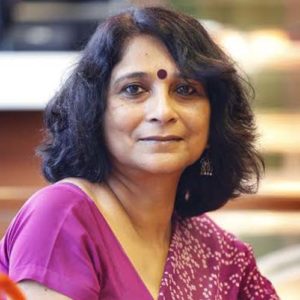
Poonam Saxena

Journalist and translator. Her English translation of Dharamvir Bharati’s Gunahon ka Devta (published as Chander & Sudha by Penguin Viking) was widely praised. Editor of the Hindustan Times Sunday magazine. She brings both literary rigour and editorial clarity to the question of what makes a translation publishable.
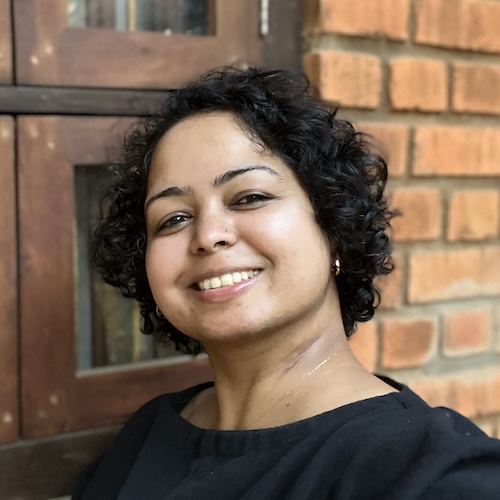
Deepa Bhasthi

Award-winning translator of Kannada literature into English. Known for her Booker-prize winning translation of the Heart Lamp and others. One of the most formally inventive voices in contemporary Indian translation. She will push you on register, rhythm, and what it means to carry a voice across languages.
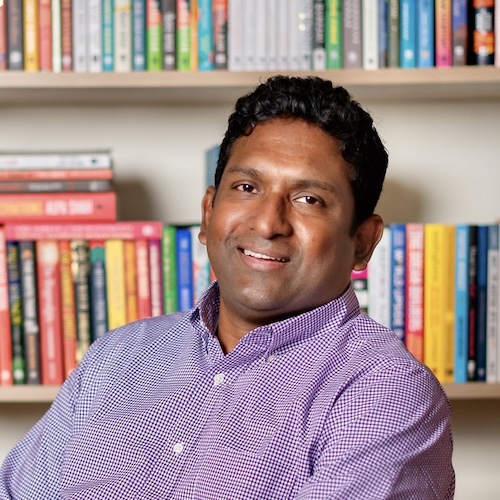
Ananth Padmanabhan

CEO, HarperCollins India. He sees more translation manuscripts than almost anyone in Indian publishing. His presence means this retreat connects craft directly to the industry: what gets published, why, and how to get there.

For those building a life in translation

Over eight intensive days at Samode Haveli, Translations: Bridging Stories Across Languages brings together a small cohort of translators working across Indian languages for a deep, rigorous engagement with craft, voice, and literary responsibility.
Over the course of the retreat, you will:

  • Interrogate translation as interpretation, not transfer
  • Work intensively on voice, dialogue, rhythm, and register
  • Translate, revise, and defend your choices in close discussion
  • Understand what makes a translation publishable, and what does not
  • Engage with the realities of Indian and international publishing ecosystems

At this retreat, you don't just speak about translation. You work through it, line by line, choice by choice.

Where translation is treated as literature

Translation is a practice of attention. It asks the translator to enter a text closely, to understand not only what is being said, but how it is being shaped. Meaning, in this sense, is never fixed. It is built through tone, rhythm, and structure, and must be rebuilt each time it moves across languages.

The work is neither mechanical nor immediate. It unfolds through revision, through hesitation, through a series of considered choices. A translation succeeds when it reads as literature, while still carrying the presence of where it comes from.

The shift you will see during and after the retreat:

  • You begin to see translation as writing
  • You develop control over voice
  • You build editorial discipline
  • You engage with language as culture
  • You understand what makes a translation publishable
  • You leave with work that has moved forward
  • You leave with a practice

Where India’s next generation of translators is shaped

Within the layered architecture of Samode Haveli, the retreat unfolds in a rhythm that mirrors the work itself: slow, attentive, and cumulative. It is a setting that holds both solitude and exchange, allowing the work to move between the page and the room, between individual thought and shared inquiry.

Arches that hold weight.
Courtyards that invite dialogue.
Walls layered with time.
Like translation itself, the space is built on structure, nuance, and quiet attention.

There is room for hesitation, for revision, for decisions that cannot be rushed. The haveli does not distract from the work, it makes it possible.

Testimonials

Aparna Piramal RajeChapter One
The experience felt like being on a very well-equipped, luxurious desert island for a week where ​I was able to immerse myself in writing. It makes such a difference to be surrounded by professionals such as yourselves and faculty for the retreat who are working full-time in this field. It’s hard to create that atmosphere in a commercial, non-literary, town such as Mumbai. ​Thanks to you and your team for organising such a comfortable retreat.
Sanjana ShahChapter One
I wasn't sure what to expect from this retreat; I was hopeful that it would help me grow into the writer I wanted to be, but it gave me so much more.​ There was so much to learn from each of ​t​he mentors, including the art of storytelling in person!​ It has added meaning to my writing journey, as I know now that I'm not doing this alone, no longer an outsider just looking in through a glass wall, and that has made all the difference. ​I wish you luck for all your future endeavours, and may more people experience the magic of Siyahi and storytelling!
Tanisha MehtaChapter Two
I have spent the last few days processing the tremendous depth of knowledge I have gained and connections I have formed through this effort. I can easily say it's one of the best things I have done for myself, and it has truly reinvigorated my desire to always write. I had this idea when I signed up that I would end the 2 weeks with a novel in my hand, but in reality, I left with so much more (and a complete do-over of 40,000 words). It sounds insane to be happy about it, but I am. Thank you, from the bottom of my heart. This was a spiritual experience!
Sukhdeep KaurChapter Two
I had arrived at the retreat wondering if an aspiring author like me could afford two weeks of luxury. Cocooned in my own world of writing this book, I was also intimidated by the prospect of hypersocialising. But the masterclasses, Prem's feedwork on the sample chapter, and the group discussions on structure, editing, and how to pitch the story were quite useful. I have come home feeling both overwhelmed and inspired.
Maya SriramChapter Three
Gratitude. For putting together this brilliant retreat. For placing two excellent but very different writers of history together so that we get insights into not just the mechanics of the craft of writing but also the philosophy of it.

What is lost if I translate this literally? What is lost if I don’t? Am I explaining, or trusting the reader? Does this read like language, or like literature?

If these are the questions that plague you too, this is where you come.
Limited spots available.